
Robotic Knee Replacement Surgery in Noida is an advanced orthopaedic procedure that uses robotic-assisted technology to help surgeons plan and perform knee replacement with precision. It is commonly considered for patients with severe knee arthritis, persistent joint pain, stiffness, and difficulty walking when non-surgical treatments no longer provide adequate relief.
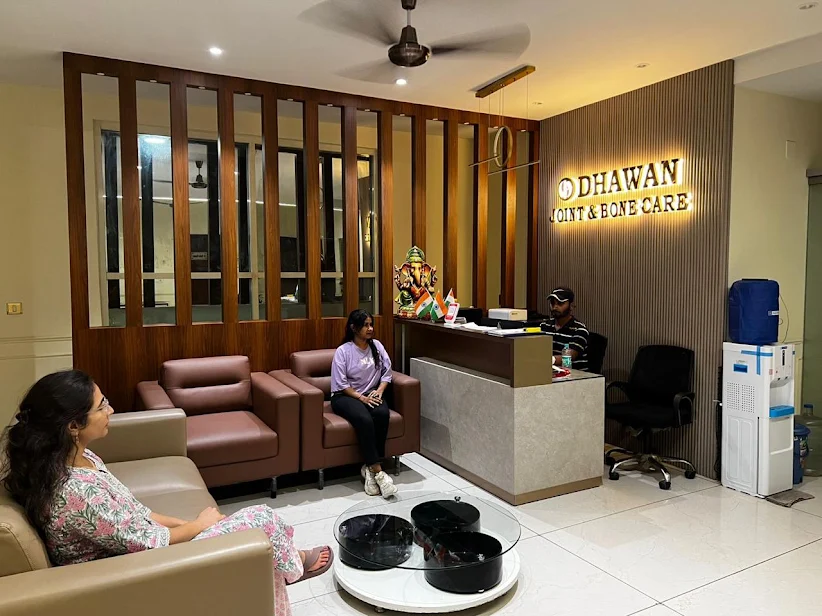
At Dhawan Joint & Bone Care, Dr. Tushar Dhawan offers orthopaedic consultation and guidance for patients exploring modern knee replacement options. With specialized training in joint replacement surgery, he evaluates each patient's condition to determine the most appropriate treatment based on joint damage, alignment, activity levels, and overall health.
Robotic knee replacement surgery combines advanced computer-assisted planning with robotic technology to help the surgeon position knee replacement components accurately. The surgeon remains in control throughout the procedure, using information from the planning system and real-time surgical assessments to guide the operation.
Depending on the patient's condition and the technology available, robotic assistance may help with surgical planning, bone preparation, and implant positioning. The goal is to restore knee joint function, reduce pain, and support recovery.
Robotic assistance does not mean that a robot performs the surgery independently. The procedure is planned and performed by a qualified orthopaedic surgeon.
Robotic knee replacement may be considered for patients whose knee joint damage significantly affects their mobility and quality of life.
Common conditions include:
Advanced Knee Osteoarthritis: Progressive cartilage wear that causes pain, stiffness, and reduced mobility.
Rheumatoid Arthritis: Inflammatory joint damage that affects knee function.
Persistent Knee Pain: Pain that continues despite appropriate medication, physiotherapy, and other conservative treatments.
Joint Deformity: Changes in knee alignment associated with advanced joint damage.
Reduced Mobility: Difficulty walking, climbing stairs, standing, or performing routine activities.
Severe Joint Damage: Conditions in which knee replacement is considered an appropriate treatment option.
A detailed orthopaedic assessment and appropriate imaging help determine whether knee replacement is necessary and whether robotic assistance is suitable.
For appropriately selected patients, robotic-assisted knee replacement may offer several benefits.
Personalized Surgical Planning: Technology helps the surgeon plan the procedure according to the patient's anatomy.
Precise Implant Positioning: Robotic assistance can support accurate bone preparation and implant placement.
Assessment of Knee Alignment: Planning tools may help evaluate alignment and joint balance during surgery.
Potentially Improved Joint Function: Appropriate implant positioning may support knee movement and stability.
Reduced Surgical Variability: Technology can help the surgeon execute a carefully planned procedure.
Support for Recovery: A suitable surgical plan combined with rehabilitation can help patients work toward improved mobility.
The benefits vary according to the patient's condition, the surgical technique, and the technology used. Robotic surgery does not guarantee less pain, faster recovery, or better long-term outcomes for every patient.
Both robotic-assisted and conventional knee replacement aim to relieve pain and improve joint function by replacing damaged joint surfaces with artificial components.
Robotic Knee Replacement: Uses computer-assisted planning and robotic technology to help guide aspects of the operation.
Conventional Knee Replacement: Uses established surgical techniques and instruments to prepare the joint and position the implants.
Robotic assistance may provide additional planning and precision tools, but the most suitable approach depends on the patient's needs, the surgeon's assessment, and available technology. Both methods can provide effective results when appropriately selected and performed.
Robotic knee replacement surgery involves several stages designed to support careful planning and surgical execution.
The surgeon reviews the patient's symptoms, medical history, physical examination findings, and imaging results to determine whether knee replacement is appropriate.
Depending on the robotic system used, imaging and anatomical information help create a plan for implant positioning and joint alignment.
The surgeon removes the damaged joint surfaces and prepares the bone for the artificial components, using robotic assistance where appropriate. The surgeon controls the procedure and makes clinical decisions throughout the operation.
Following surgery, the medical team monitors the patient's recovery, manages pain, and provides guidance on wound care, walking, and rehabilitation.
Recovery after robotic knee replacement surgery involves healing, gradual mobilization, and a structured rehabilitation program. Many patients begin standing or walking with assistance soon after surgery when medically appropriate.
The recovery plan may include:
Early Walking: Supported movement to gradually restore mobility.
Knee Movement Exercises: Prescribed exercises to improve flexibility and range of motion.
Muscle Strengthening: Exercises to strengthen the quadriceps and surrounding muscles.
Balance Training: Activities to improve stability and confidence while walking.
Physiotherapy: A personalized rehabilitation program based on recovery progress.
Follow-Up Appointments: Monitoring healing, knee function, and any postoperative concerns.
Many patients experience gradual improvement over several weeks to months. Recovery varies depending on age, general health, preoperative mobility, and adherence to rehabilitation instructions.
Dr. Tushar Dhawan is a Consultant Orthopaedic Surgeon specializing in robotic joint replacement, arthroplasty, arthroscopy, and trauma care. His joint replacement training includes fellowship experience at Artemis Hospital, Gurugram, and in Germany.
At Dhawan Joint & Bone Care, patients receive orthopaedic evaluation and guidance to help them understand their treatment options.
Joint Replacement Expertise: Specialized training in modern joint replacement techniques.
Individualized Assessment: Treatment recommendations based on symptoms, imaging, and joint condition.
Advanced Surgical Approaches: Guidance on robotic-assisted and conventional knee replacement options.
Patient-Centred Communication: Clear explanations of surgical procedures, benefits, risks, and recovery expectations.
Recovery Planning: Advice on rehabilitation and the gradual return to everyday activities.
The recommended procedure depends on each patient's clinical condition and individual requirements.
Persistent knee pain can make walking, climbing stairs, and performing everyday activities difficult. If medication, physiotherapy, and other non-surgical treatments no longer provide sufficient relief, a specialist consultation can help you understand whether knee replacement is appropriate.
Consult Dr. Tushar Dhawan at Dhawan Joint & Bone Care in Noida for an evaluation of your knee condition and guidance on robotic-assisted and conventional knee replacement options.
Robotic knee replacement is a procedure in which robotic-assisted technology helps the surgeon plan and perform selected parts of knee replacement surgery with greater precision and control.
Patients with advanced knee arthritis, persistent pain, stiffness, and significant mobility limitations may be candidates for knee replacement. Robotic assistance may be considered after an orthopaedic assessment.
Robotic assistance offers additional planning and precision tools, but it is not necessarily better for every patient. Outcomes depend on the patient's condition, the surgeon's expertise, the technology used, and rehabilitation.
The procedure commonly takes around one to two hours, although the duration varies depending on the complexity of the case and the surgical approach.
Recovery generally progresses over several weeks to months. The timeline depends on overall health, preoperative mobility, healing, and participation in the prescribed rehabilitation program.
You can consult Dr. Tushar Dhawan at Dhawan Joint & Bone Care in Noida for an orthopaedic assessment and personalized guidance about robotic-assisted knee replacement.


