ACL and Meniscus Tear Treatment in Noida focuses on diagnosing and treating knee injuries that affect joint stability, movement, and everyday activities. These injuries commonly occur during sports, sudden twisting movements, falls, or accidents. Depending on the severity of the injury, treatment may involve rest, physiotherapy, activity modification, medication, or arthroscopic surgery.
At Dhawan Joint & Bone Care, Dr. Tushar Dhawan provides orthopaedic consultation and treatment guidance for patients experiencing knee pain, swelling, instability, and restricted movement. With expertise in arthroscopy, sports injury management, and orthopaedic surgery, he helps patients understand their condition and explore appropriate treatment options.
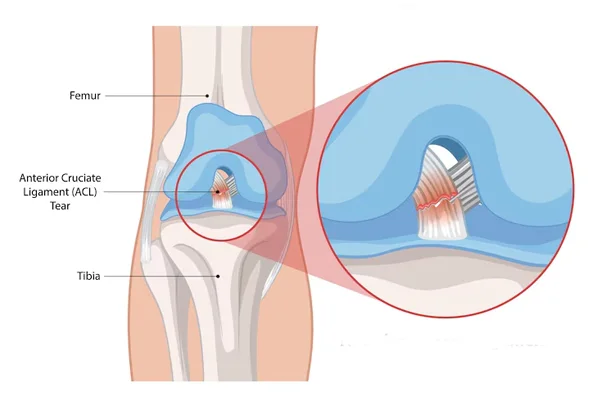
The anterior cruciate ligament (ACL) is one of the major ligaments that helps stabilize the knee joint. An ACL tear occurs when this ligament is stretched or damaged, often during sudden changes in direction, jumping, landing, or sports activities.
The meniscus consists of two C-shaped pieces of cartilage that cushion the knee joint between the thigh bone and shin bone. A meniscus tear can occur due to twisting injuries or age-related degeneration.
Some patients experience an ACL tear and a meniscus tear together. Accurate diagnosis is important to determine the extent of the injury and develop an appropriate treatment plan.
Symptoms vary depending on the type and severity of the injury. Common warning signs include:
Knee Pain: Pain around the joint, particularly during movement or weight-bearing activities.
Swelling: Swelling that may develop soon after an injury or increase over time.
Joint Instability: A feeling that the knee may give way during walking or sports.
Restricted Movement: Difficulty fully bending or straightening the knee.
Locking or Catching: A sensation that the knee gets stuck during movement, which can occur with certain meniscus tears.
Difficulty Walking: Discomfort or instability while standing, walking, or climbing stairs.
Severe pain, significant swelling, inability to bear weight, or a locked knee should be assessed promptly by a medical professional.
ACL and meniscus injuries may occur due to different mechanisms, including:
Sports Injuries: Football, basketball, badminton, and other activities involving rapid changes in direction.
Sudden Twisting: Rotating the knee while the foot remains planted.
Awkward Landings: Landing incorrectly after a jump.
Direct Impact: Trauma to the knee during an accident or collision.
Degenerative Changes: Gradual weakening of the meniscus with age, sometimes causing tears during routine activities.
Understanding how the injury occurred helps the orthopaedic specialist assess the knee and recommend suitable investigations.
Accurate diagnosis helps determine whether the injury can be managed without surgery or requires an operative procedure.
The evaluation may include:
Clinical Examination: Assessment of pain, swelling, range of motion, and knee stability.
Stability Tests: Specific examination techniques to evaluate the ACL and other knee ligaments.
MRI Scan: Imaging that can help identify ligament and meniscus injuries.
X-rays: Used when necessary to assess bones, fractures, and signs of arthritis.
The treatment recommendation depends on the examination findings, imaging results, injury severity, activity level, and overall health.
Treatment is individualized according to the injury and the patient's functional needs.
Some partial ACL injuries and selected meniscus tears may improve with conservative management. This may include:
Rest and temporary activity modification
Ice and elevation to help manage swelling
Appropriate pain-relief medication prescribed by a clinician
Physiotherapy to improve strength, flexibility, and knee control
Rehabilitation exercises to restore balance and movement
Not every ACL or meniscus tear requires surgery. However, persistent instability, mechanical symptoms, or specific tear patterns may require further evaluation.
ACL reconstruction may be recommended when a significant ACL tear causes ongoing instability or prevents a patient from safely returning to desired activities. The procedure involves reconstructing the damaged ligament using a suitable graft.
Arthroscopic techniques use small incisions and a camera to guide the procedure. The choice of graft and surgical approach depends on the patient's condition, activity requirements, and clinical assessment.
Meniscus repair may be appropriate for selected tears where the cartilage can be repaired and has a reasonable chance of healing. Preserving the meniscus is generally preferred when feasible because it helps distribute loads across the knee joint.
In certain cases where a tear cannot be repaired and continues to cause symptoms, the surgeon may remove the unstable damaged portion of the meniscus while preserving as much healthy tissue as possible.
The most appropriate procedure depends on the tear's location, pattern, blood supply, and the patient's symptoms and functional goals.
Recovery varies according to the injury, the treatment chosen, and the patient's healing progress. Rehabilitation is an important part of both surgical and non-surgical management.
A recovery program may include:
Pain and Swelling Management: Following medical advice to manage discomfort and swelling.
Range-of-Motion Exercises: Gradually restoring knee bending and straightening.
Muscle Strengthening: Building quadriceps, hamstring, and supporting muscle strength.
Balance Training: Improving coordination and knee control.
Progressive Activity: Gradually returning to walking, work, and other routine activities.
Sports-Specific Rehabilitation: For eligible patients, progressing toward running and sports after meeting functional milestones.
After ACL reconstruction, returning to pivoting sports often takes several months and commonly requires around 9–12 months or longer, depending on recovery and functional testing. Meniscus repair may also require specific restrictions. Patients should follow their surgeon's and physiotherapist's instructions rather than relying on a fixed timeline.
Dr. Tushar Dhawan is a Consultant Orthopaedic Surgeon specializing in arthroscopy, sports injury management, joint replacement, and trauma care. At Dhawan Joint & Bone Care, he provides orthopaedic assessment and guidance for patients experiencing knee injuries and movement limitations.
Patients can expect:
Sports Injury Expertise: Assessment of ligament injuries and meniscus-related knee problems.
Accurate Diagnosis: Clinical evaluation and appropriate imaging recommendations.
Personalized Treatment: Guidance on conservative management, rehabilitation, and surgical options.
Arthroscopic Surgery Expertise: Evaluation for minimally invasive procedures when clinically indicated.
Recovery-Focused Guidance: Advice on rehabilitation and a safe, gradual return to activity.
Treatment decisions are based on the patient's individual diagnosis, functional needs, and clinical findings.
Knee injuries can affect your ability to walk comfortably, exercise, and participate in sports. Early assessment can help identify the extent of an ACL or meniscus tear and determine the most appropriate course of treatment.
Consult Dr. Tushar Dhawan at Dhawan Joint & Bone Care in Noida for an orthopaedic evaluation and personalized guidance on ACL injuries, meniscus tears, arthroscopy, and rehabilitation options.
An ACL tear affects a ligament that stabilizes the knee, while a meniscus tear affects the cartilage that cushions the joint. Both injuries can cause pain, swelling, and difficulty moving the knee.
Some partial ACL injuries may be managed without surgery using physiotherapy and activity modification. Complete tears associated with persistent instability or high activity demands may require reconstruction.
No. Some meniscus tears improve with conservative treatment. Surgery may be considered when symptoms persist, the knee locks, or the tear pattern is suitable for repair or removal of unstable tissue.
Diagnosis usually involves a clinical knee examination and may include an MRI scan to assess the ligaments and meniscus. X-rays may be used to evaluate the bones.
Recovery depends on the procedure and injury severity. ACL reconstruction recovery may take 9–12 months or longer before returning to pivoting sports, while meniscus recovery varies depending on whether the tear is repaired or partially removed.
You can consult Dr. Tushar Dhawan at Dhawan Joint & Bone Care in Noida for knee injury assessment and guidance on appropriate treatment and rehabilitation options.


