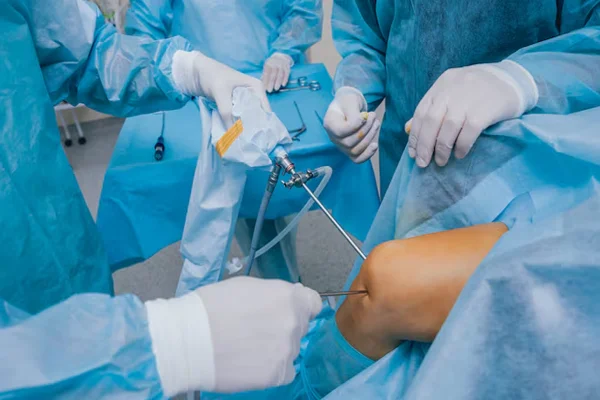
Revision Arthroscopy Surgery in Noida is a specialized orthopaedic procedure considered when a patient continues to experience joint pain, stiffness, instability, or other problems after a previous arthroscopic surgery. Arthroscopy is a minimally invasive technique that uses a small camera and specialized instruments to examine and treat problems inside a joint.
At Dhawan Joint & Bone Care, Dr. Tushar Dhawan provides orthopaedic consultation and treatment guidance for patients experiencing persistent symptoms following previous joint procedures. With expertise in arthroscopy, sports injury management, and orthopaedic surgery, he evaluates each patient's condition to determine the underlying cause and recommend an appropriate treatment plan.
Revision arthroscopy surgery refers to a repeat arthroscopic procedure performed when symptoms persist or a new problem develops after an earlier arthroscopy. It may be considered when the original injury has not healed as expected, joint instability continues, or additional damage requires treatment.
The procedure involves examining the affected joint using an arthroscope and specialized surgical instruments. Depending on the underlying problem, the surgeon may treat damaged tissue, address scar tissue, manage certain cartilage or meniscus problems, or assess ligament-related complications.
Revision arthroscopy is not necessary in every case. A thorough assessment helps determine whether further surgery, rehabilitation, medication, or another treatment approach is more appropriate.
Revision arthroscopy may be considered when a patient experiences ongoing or recurring symptoms following a previous arthroscopic procedure.
Common reasons for evaluation include:
Persistent Joint Pain: Pain that continues despite the initial surgery and rehabilitation.
Recurrent Joint Instability: Ongoing giving-way symptoms, particularly after certain ligament procedures.
Meniscus Problems: Persistent or recurrent symptoms associated with a meniscus injury or previous meniscus surgery.
Scar Tissue Formation: Restricted joint movement caused by excessive scar tissue in selected cases.
Cartilage Damage: Joint surface problems that continue to cause pain or mechanical symptoms.
Incomplete Recovery: Limited improvement in mobility or function following the original procedure.
The need for revision surgery depends on the specific joint, previous procedure, current symptoms, examination findings, and diagnostic imaging.
Revision arthroscopy may involve different procedures depending on the affected joint and the underlying condition.
Revision knee arthroscopy may be considered for persistent meniscus symptoms, selected cartilage problems, scar tissue, or other conditions affecting knee movement after an earlier procedure.
Patients experiencing persistent instability after ACL reconstruction may require an assessment of ligament function, tunnel position, graft condition, and other factors. Revision ACL reconstruction may be necessary in selected cases, but it is a distinct procedure that requires careful planning.
Revision shoulder arthroscopy may be considered for selected cases involving persistent stiffness, recurrent instability, or ongoing symptoms after previous shoulder arthroscopy.
The appropriate procedure depends on the original surgery, the current problem, and the condition of the joint.
When clinically appropriate, revision arthroscopy may help address problems that have not resolved after an earlier procedure.
Potential benefits include:
Targeted Joint Treatment: Allows the surgeon to examine and treat selected problems within the joint.
Small Surgical Incisions: Arthroscopy generally uses smaller incisions than traditional open surgery.
Improved Joint Function: Treatment may help improve movement when a correctable problem is identified.
Management of Mechanical Symptoms: Selected procedures may address catching, locking, or movement restrictions caused by specific joint problems.
Personalized Surgical Planning: Treatment is tailored to the patient's previous procedure and current diagnosis.
Rehabilitation Support: Appropriate follow-up and rehabilitation help patients work toward improved mobility.
Outcomes vary according to the cause of symptoms, previous surgery, joint condition, and overall health. Revision procedures can be more complex than first-time arthroscopy, and improvement cannot be guaranteed.
Revision arthroscopy generally involves several stages.
The orthopaedic surgeon reviews the previous surgical records, current symptoms, physical examination findings, and relevant imaging to identify the cause of ongoing problems.
Additional investigations, such as X-rays or MRI scans, may be recommended. The surgeon determines whether revision arthroscopy is appropriate or whether an alternative procedure would be more effective.
When surgery is indicated, a small camera and specialized instruments are inserted through small incisions. The surgeon examines the joint and treats the identified problem according to the surgical plan.
Following the procedure, patients receive instructions about wound care, pain management, activity restrictions, and rehabilitation. Recovery requirements depend on the specific procedure performed.
Recovery following revision arthroscopy varies according to the joint involved, the underlying problem, and the treatment performed. Some patients can resume light activities relatively soon, while others require a longer rehabilitation period.
Recovery may include:
Pain and Swelling Management: Following medical advice to manage discomfort and swelling.
Joint Mobility Exercises: Gradually improving movement as recommended by the treating team.
Muscle Strengthening: Rebuilding strength in the muscles surrounding the affected joint.
Physiotherapy: Following a structured rehabilitation plan tailored to the procedure.
Activity Modification: Avoiding movements or activities that could interfere with healing.
Follow-Up Appointments: Monitoring recovery and addressing any ongoing symptoms.
Patients should follow their surgeon's instructions carefully, as rehabilitation after revision surgery may differ from recovery after the original procedure.
Dr. Tushar Dhawan is a Consultant Orthopaedic Surgeon specializing in arthroscopy, sports injury management, joint replacement, and trauma care. At Dhawan Joint & Bone Care, he provides orthopaedic evaluation and treatment guidance for patients experiencing persistent joint symptoms.
Patients can expect:
Comprehensive Joint Assessment: Evaluation of symptoms and previous surgical outcomes.
Arthroscopy Expertise: Assessment of joint problems that may benefit from minimally invasive procedures.
Individualized Treatment Planning: Recommendations based on the underlying diagnosis and previous treatment.
Clear Patient Guidance: Explanations of available options, potential risks, and recovery expectations.
Recovery-Focused Care: Advice on rehabilitation and follow-up requirements.
The appropriate treatment is determined by clinical findings and the patient's individual needs.
Persistent pain, stiffness, or instability following a previous arthroscopic procedure may require further evaluation. Identifying the underlying cause is essential before deciding whether another operation is necessary.
Consult Dr. Tushar Dhawan at Dhawan Joint & Bone Care in Noida for an orthopaedic assessment and personalized guidance on revision arthroscopy and other suitable treatment options.
Revision arthroscopy is a repeat minimally invasive joint procedure performed when symptoms persist or a new problem develops after an earlier arthroscopic surgery.
It may be considered for persistent pain, recurrent instability, selected meniscus or cartilage problems, scar tissue, or other complications following previous surgery.
It can be more complex because of scar tissue, changes in joint anatomy, or previous surgical procedures. The complexity depends on the original surgery and the current problem.
Recovery varies according to the joint involved and the procedure performed. Some patients recover within weeks, while more complex procedures may require several months of rehabilitation.
No. Some problems can be managed with physiotherapy, activity modification, or other treatments. Revision surgery is considered only when the assessment indicates that it may provide meaningful benefit.
You can consult Dr. Tushar Dhawan at Dhawan Joint & Bone Care in Noida for an evaluation of persistent joint symptoms and guidance on suitable treatment options.


