
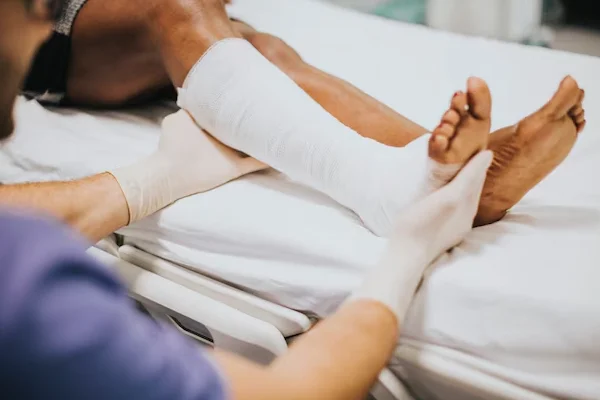
Fractures, accidents, sports injuries, and other musculoskeletal trauma can affect mobility, cause significant pain, and interfere with everyday activities. Timely assessment and appropriate treatment are important for supporting bone healing, restoring joint function, and reducing the risk of complications. At Dhawan Joint & Bone Care, Dr. Tushar Dhawan provides orthopaedic evaluation and treatment planning for fractures, traumatic injuries, and other bone and joint conditions in Noida.
With expertise in orthopaedics, trauma management, and fracture care, Dr. Tushar Dhawan focuses on evaluating each injury and recommending an appropriate treatment approach based on its severity, location, and the patient's overall health.
If you are looking for Fracture, Trauma Care and Injury Management in Noida, professional orthopaedic assessment can help determine the right course of treatment and rehabilitation.
A fracture is a break or crack in a bone that may occur due to a fall, road traffic accident, sports injury, direct impact, or weakened bones. Traumatic injuries can also affect muscles, ligaments, tendons, joints, and surrounding soft tissues.
The severity of an injury can range from a small, stable fracture to a complex injury involving multiple bones, joints, blood vessels, or nerves. Some fractures may be managed without surgery, while others require surgical stabilisation.
Common orthopaedic injuries include:
Arm, wrist, and hand fractures
Leg, ankle, and foot fractures
Shoulder and collarbone fractures
Hip and pelvic fractures
Fractures around the knee and elbow
Sports-related bone and joint injuries
Ligament and tendon injuries associated with trauma
Multiple fractures following accidents
Open fractures, where the injury communicates with the outside through a wound
Fractures and traumatic injuries can occur in people of all ages. The cause and force of the injury often influence the type of treatment required.
Vehicle collisions can cause fractures, dislocations, and soft-tissue injuries. High-impact accidents may involve several parts of the body and require urgent hospital assessment.
Falls at home, at work, or outdoors can lead to wrist, ankle, shoulder, or hip fractures. Older adults and people with reduced bone strength may be particularly vulnerable.
Sudden twisting movements, direct contact, falls, and excessive force can cause fractures and injuries to ligaments, tendons, and joints.
Falls from heights, heavy objects, machinery-related accidents, and other workplace incidents may result in significant musculoskeletal trauma.
Bones weakened by osteoporosis may fracture after relatively minor falls or impacts. Assessment of underlying bone health may be appropriate, particularly in older adults or people with recurrent fractures.
Symptoms vary according to the location and severity of an injury. Common warning signs include:
Sudden pain following an accident or fall
Swelling, bruising, or tenderness
Difficulty moving the affected limb
Inability to stand or put weight on a leg
Visible deformity or an unusual limb position
Restricted joint movement
Numbness, tingling, or weakness
An open wound near a suspected fracture
Not every fracture causes an obvious deformity, and some people can still move the affected limb. Persistent pain after an injury should therefore be assessed rather than dismissed.
Seek emergency medical care immediately for severe trauma, an open fracture, uncontrolled bleeding, a visibly deformed limb, loss of sensation, a cold or pale extremity, or suspected head, neck, chest, or abdominal injury. Do not attempt to straighten a deformed limb or push exposed bone back into place.
Accurate diagnosis helps determine the safest and most appropriate treatment plan. The evaluation may include:
The orthopaedic assessment considers the injury mechanism, pain, swelling, deformity, joint movement, skin condition, and circulation and sensation in the affected limb.
X-rays are commonly used to identify fractures, assess bone alignment, and evaluate whether the injury is stable or displaced.
A CT scan may be recommended for complex fractures, joint-surface injuries, or fractures that need more detailed assessment for treatment planning.
MRI may be useful when a ligament, tendon, cartilage, or other soft-tissue injury is suspected, or when symptoms persist despite inconclusive initial imaging.
The investigations required depend on the injury and the patient's clinical condition.
Treatment depends on the type of fracture, its location, the degree of displacement, the condition of surrounding tissues, and the patient's general health.
Stable fractures with acceptable alignment may be treated using a cast, splint, brace, or other support. Follow-up examinations and imaging help assess healing and identify any changes in alignment.
When a fracture is displaced, a clinician may need to reposition the bone fragments. This procedure, known as fracture reduction, may be performed with appropriate pain relief or anaesthesia.
Some fractures require surgery to restore alignment and stabilise the bone. Depending on the injury, fixation may involve plates, screws, rods, wires, or other implants.
Surgical treatment may be considered for unstable or significantly displaced fractures, certain joint fractures, open fractures, and injuries that cannot be adequately managed with immobilisation alone.
Open fractures require urgent hospital treatment because of the risk of contamination and infection. Management may involve wound care, antibiotics, surgical cleaning, and fracture stabilisation according to the injury and clinical findings.
Trauma can affect ligaments, tendons, muscles, nerves, and blood vessels alongside the bone. Additional evaluation and specialist care may be required when these structures are involved.
After the initial injury has been treated, a rehabilitation plan may help improve joint mobility, muscle strength, balance, and functional movement. The timing and intensity of exercises depend on fracture stability, healing progress, and the treating clinician's advice.
Recovery varies according to the type of fracture, the severity of the injury, the treatment provided, age, bone health, and other medical factors. Some fractures heal within several weeks, while complex injuries may require several months or longer.
A structured recovery plan may include:
Scheduled orthopaedic follow-up visits
Repeat imaging when clinically indicated
Appropriate protection of the injured area
Gradual return to weight-bearing and daily activities
Physiotherapy when recommended
Adequate nutrition and assessment of bone health
Monitoring for pain, swelling, stiffness, or other complications
Patients should follow their individual weight-bearing and activity instructions. Returning to sports, heavy lifting, or strenuous work too early may interfere with recovery.
Although many fractures heal well with appropriate care, some injuries can lead to complications. These may include:
Delayed bone healing or non-union
Healing in an incorrect position
Joint stiffness and reduced mobility
Infection, particularly with open fractures or surgery
Persistent pain
Blood vessel or nerve injury
Blood clots in certain high-risk situations
Post-traumatic arthritis when a joint surface is affected
Early assessment, appropriate treatment, and follow-up can help identify complications and guide further management.
Dr. Tushar Dhawan provides orthopaedic assessment for fractures, bone injuries, and musculoskeletal trauma.
Treatment recommendations are based on the fracture pattern, injury severity, imaging findings, and the patient's functional needs.
Follow-up care helps monitor alignment, healing progress, and the return of movement following injury.
Depending on the injury, treatment planning may involve immobilisation, fracture reduction, surgical fixation, or referral for additional specialist care.
Appropriate recovery guidance can support gradual improvement in mobility, strength, and everyday function.
Patients seeking fracture and injury assessment in Noida can consult Dhawan Joint & Bone Care for evaluation and guidance on appropriate next steps.
You should seek medical assessment if you experience persistent pain, swelling, restricted movement, or difficulty bearing weight after a fall or injury. A suspected fracture should be assessed promptly, even when the pain seems manageable.
Emergency evaluation is essential for open fractures, severe bleeding, major accidents, obvious deformity, loss of circulation or sensation, or suspected injuries to the head, neck, chest, or abdomen. In major trauma, call emergency services and avoid unnecessary movement of the injured person.
Fractures and traumatic injuries require timely evaluation and an appropriate treatment plan. Dr. Tushar Dhawan at Dhawan Joint & Bone Care offers orthopaedic assessment for bone fractures, sports injuries, and other musculoskeletal trauma in Noida.
Consult an orthopaedic professional to understand your injury, available treatment options, and the follow-up care needed for recovery.
Seek medical assessment as soon as possible after an injury involving significant pain, swelling, deformity, or difficulty moving or bearing weight. Severe injuries and open fractures require emergency care.
Yes. Many stable fractures can heal with a cast, splint, brace, or other non-surgical treatment. Surgery may be needed when a fracture is displaced, unstable, involves a joint in a complex way, or cannot be adequately stabilised without an operation.
Healing time depends on the bone involved, fracture severity, age, bone health, and treatment. Some fractures heal within several weeks, while complex fractures may take months or longer.
A fracture involves a break or crack in a bone. A soft-tissue injury affects structures such as muscles, ligaments, or tendons. Both can cause pain and swelling, and imaging or clinical examination may be required to distinguish them.
Physiotherapy may be recommended to restore movement, strength, balance, and function after a fracture. The timing depends on the type of injury, stability of the bone, healing progress, and medical advice.
Stop the activity, keep the injured area as still as possible, and seek medical help. Do not try to straighten the limb. If there is an open wound, cover it with a clean dressing without pushing exposed bone back inside, and obtain emergency care.
You should not assume it is safe to walk on an injured leg. Avoid putting weight on it until you have received appropriate medical advice, particularly if walking causes pain or the injury may be a fracture.
You can contact Dhawan Joint & Bone Care to arrange an orthopaedic assessment with Dr. Tushar Dhawan. Major trauma, open fractures, uncontrolled bleeding, or injuries affecting circulation or sensation require immediate emergency hospital care.


